Okay, that tattoo. Your ex’s name, a design you once thought was a great idea, or one that just didn’t turn out the way you’d hoped. Regretting a tattoo really happens to the best of us. The good news: with a tattoo cover-up, there’s often much more you can do than you think. But not everything—and we’d rather be honest about that.
In this blog, you’ll learn what is and isn’t possible with a tattoo cover-up, which designs work well, and how the process works at INKORPORATED in Amsterdam.
What is a tattoo cover-up?
A cover-up involves placing a new tattoo over an existing one so that the old one is no longer visible. The new design is skillfully built around the old lines and shapes, much like a puzzle. Usually, a cover-up is larger and darker than the tattoo it’s covering up.
The reasons vary widely. Some people have a tattoo from years ago that has faded. Others feel their design no longer suits them, or are unhappy with how it was done. Whatever your reason may be: with us, you don’t have to justify yourself. A good conversation with a tattoo artist is the first step.
What can actually be done with a tattoo cover-up?
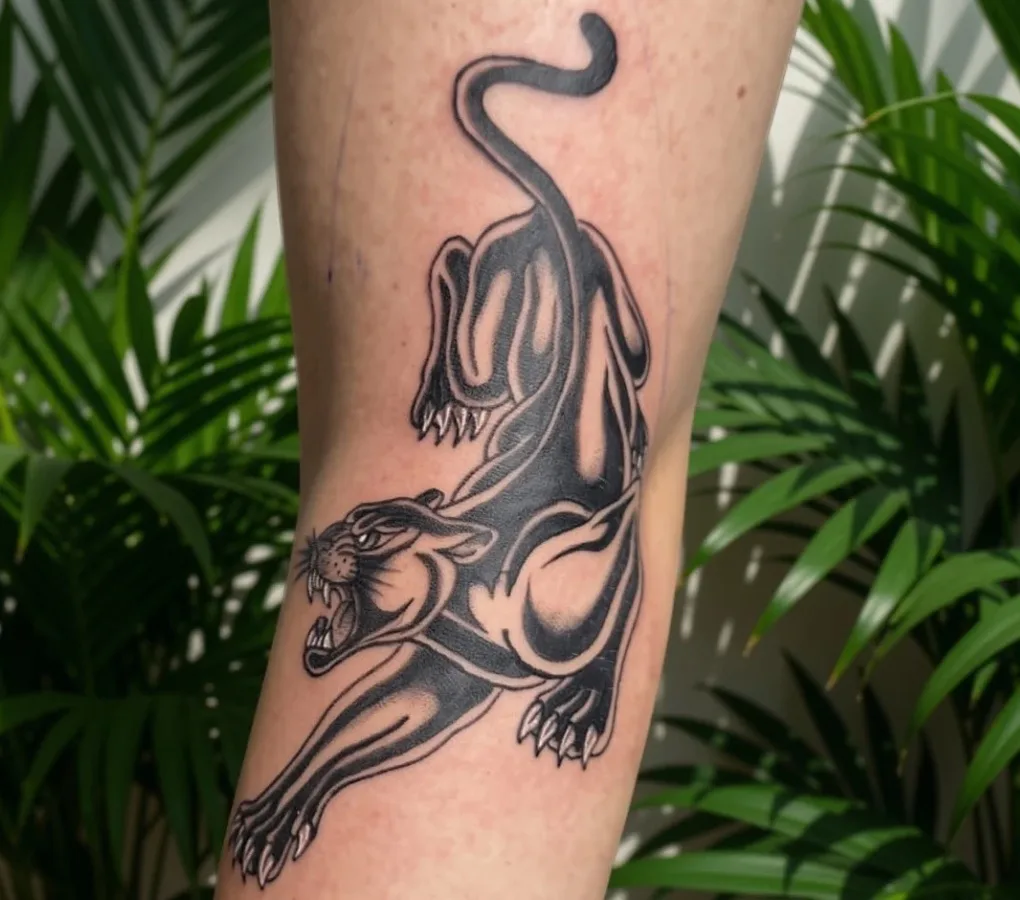
More than you might think! Whether it’s possible depends mainly on how dark, large, and high-contrast your old tattoo is. In most cases, we can turn it into something beautiful:
- Faded or light tattoos: these are the easiest to cover up, because there’s very little pigment left that shows through.
- Small and simple tattoos: think of a small symbol, a date, or a short phrase. A new design can easily go over them.
- A new, darker design: with more detail and depth, the old tattoo simply disappears into the new design.
- Redesigning your old tattoo: Sometimes it’s not necessary to cover it completely. In that case, your artist will update the existing tattoo into something new.
A name, date, or design from your previous tattoo can often be covered up effectively. The new design does, however, need to match the shape, size, and location of the old tattoo.
What isn’t possible, or is difficult?
Not every tattoo cover-up is possible, and we’ll be honest with you about that. Tattoo ink is translucent. That means you can never completely cover dark ink with light ink. As a result, these are the difficult cases:
- A light or fine tattoo over a dark one: a fine, light design won’t cover up a dark tattoo. You can read more about this type in our blog post on fine-line tattoos.
- Large, dark, and dense tattoos: such as solid blackwork. In this case, the new tattoo needs to be even darker and often larger as well, so your options are more limited.
- Smaller than your old tattoo: A cover-up is almost always larger than the old tattoo. A smaller cover-up over a large tattoo won’t work.
- Blurred lines and scars: Thickened or irregular lines may remain visible through the new design, especially if it’s difficult to incorporate them into the design.
- A fresh tattoo: Your old tattoo must be fully healed before you get something tattooed over it.
Does your tattoo fall into this category? Don’t panic. Sometimes the solution is a different design, a different approach, or a pre-treatment. More on that in a moment.
What styles work well for a cover-up?
The best style depends on what you want to cover up. In general, designs with lots of solid color, shading, and contrast work best because they draw attention away from the old tattoo. Here are some favorites:
- Black & gray: With soft shading and depth, the old tattoo blends seamlessly into the overall design.
- Blackwork: bold lines and solid black areas provide excellent coverage, especially for larger designs.
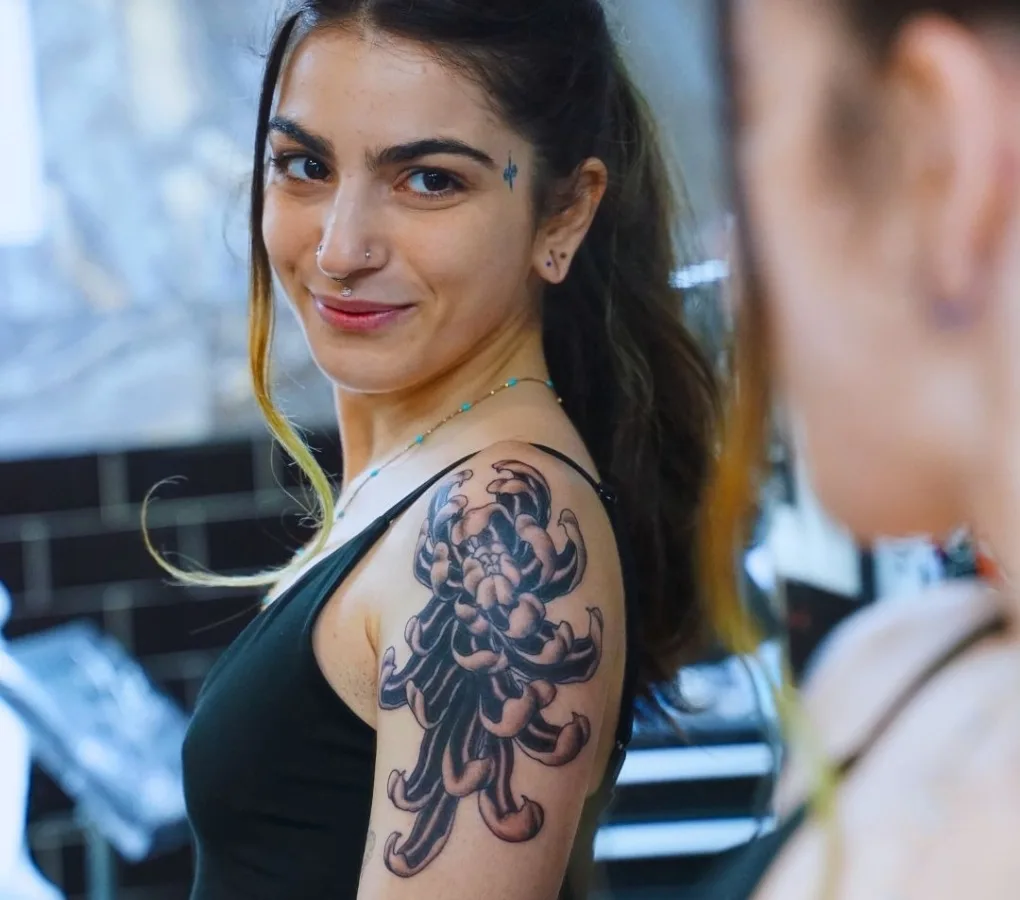
- Botanical and ornamental: flowers, leaves, and patterns follow the contours of your body and effectively conceal irregular lines.
- Realistic designs: With the right shading, a realistic image can completely take over the old tattoo.
- Color with dark shades: Using deep colors alongside black provides coverage and a vibrant result.
Not sure which style suits you? Read our blog post “Tattoo Styles Explained.” Your artist will then create a custom design that fits the location, size, and what you want to cover up. We welcome all ideas!
Cover-up or have your old tattoo lightened first?
Sometimes there’s a smart intermediate step: having your old tattoo lightened with a laser first. This lightens the pigment, giving your artist more freedom with the new design. This way, even a more delicate or lighter design is sometimes possible again.
That’s not necessary for every tattoo. For a faded or small tattoo, a cover-up is often enough. For a dark, large, or dense tattoo, a few laser sessions beforehand can actually make all the difference. Laser therapy should be performed by a specialist. Talk to your tattoo artist first. That way, you’ll know which treatment plan is right for your tattoo and how much recovery time your skin will need afterward.
Here’s how a tattoo cover-up works at INKORPORATED
A cover-up starts with a thorough consultation, without any hassle. Here’s what the process usually looks like:
- Initial Consultation: Walk in or make an appointment and show us your old tattoo. Tell us what you want to cover up and what you’d like to replace it with.
- Tip: Your artist will examine your tattoo and give you an honest assessment of what’s possible. Sometimes that means a full cover-up, sometimes a redesign, and sometimes an intermediate step, such as laser removal.
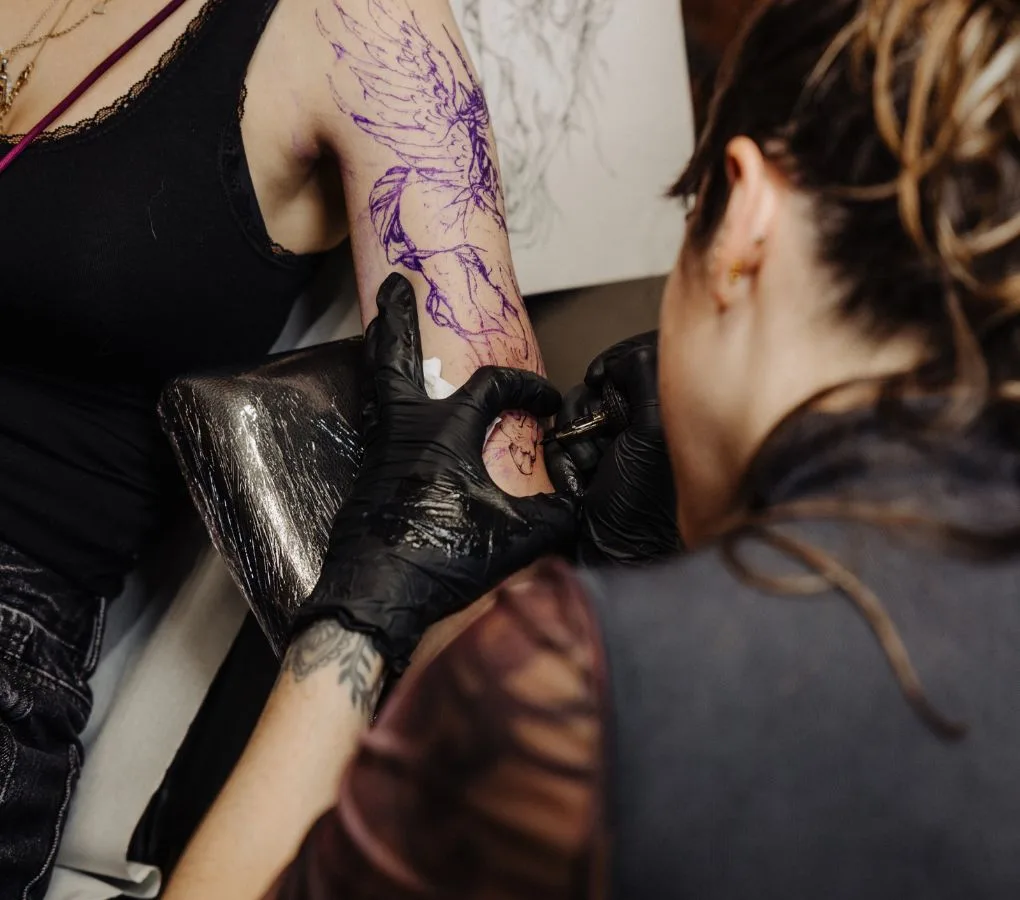
- Custom Design: The new design is created specifically for you to properly cover the old tattoo and complement your style and body.
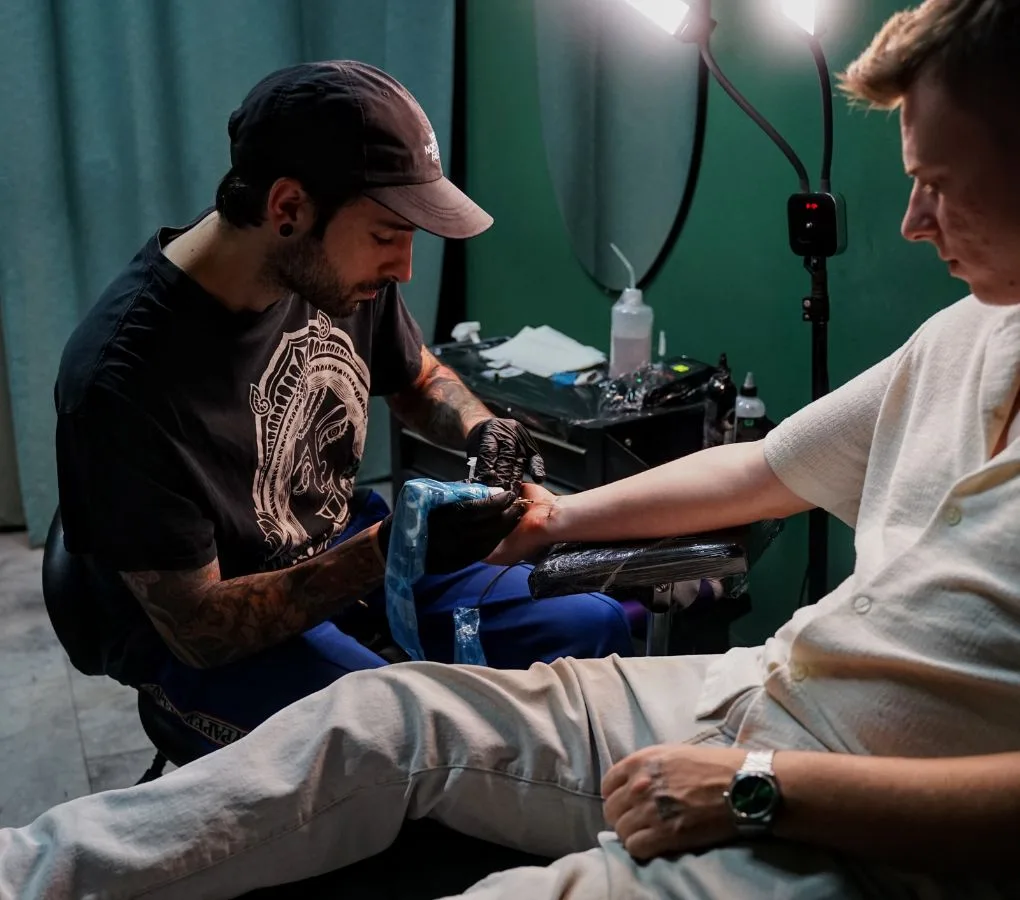
- The Session: A cover-up usually takes more time than a regular tattoo of the same size. Your artist will take the time to carefully work out every detail.
- Aftercare: You’ll receive instructions on how to care for your new tattoo so it heals beautifully and stays looking great for a long time.
Would you like to know roughly how much a tattoo costs? Then read about how much a tattoo costs. A cover-up is always priced on a case-by-case basis.
Tips for Your Consultation and Aftercare
With a little preparation, you’ll get more out of your consultation. Here’s how to approach it:
- Show examples of styles you like, but also of what you definitely don’t want.
- Think about what’s important to you: keeping the tattoo as small as possible, a certain vibe, or a specific meaning.
- Be open to advice. An artist knows what does and doesn’t work on your skin and with your old tattoo.
After your cover-up, take care of your tattoo just like you would a new one. That means: keep it clean, don’t scratch it, and stay out of the sun. You can read all about it in our blog on tattoo aftercare. Want your new tattoo to look sharp for years to come? Then check out this blog on how long a tattoo stays looking good.
Getting a tattoo cover-up in Amsterdam
At INKORPORATED, it’s all about quality and the experience. We work with a team of tattoo artists, each with their own style and specialty, ranging from fine line and black & gray to custom designs. That way, you’ll find someone who’s a good fit for what you’re looking for. Check out our tattoo artists and see which style appeals to you.
You can find us at three locations in Amsterdam: in the city center on Grimburgwal, in De Pijp, and on Reguliersdwarsstraat. Wondering if your old tattoo can be covered up? Feel free to stop by for a consultation, or make an appointment. Then we’ll explore the options together. We don’t make a big deal out of it!
Follow INKORPORATED on Instagram & TikTok!
Frequently Asked Questions – Tattoo Cover-Up
Can any tattoo be covered up?
Not every one, but most can be covered up in one way or another. It depends on how dark, large, and dense your old tattoo is. Your artist will give you an honest assessment of what’s possible.
Is a cover-up always larger than the old tattoo?
Usually, yes. The new design needs to completely cover the old tattoo, and that’s usually only possible with a larger and darker design.
When can I change my tragus jewelry?
Wait until the piercing has fully healed and is no longer painful or tender. Not sure? Have your piercer check it first.
Does a cover-up hurt more than a regular tattoo?
The pain mainly depends on the location on your body and how long the session lasts. A cover-up session often takes longer, so be sure to set aside some extra time for it.
When can I get a cover-up?
Only once your old tattoo has fully healed. If you’ve had laser treatment first, your practitioner will work with your artist to determine how long you need to wait.
Can I drop by for a cover-up without an appointment?
Feel free to stop by for an introductory visit. Want to make sure we have time for you? Then make an appointment.
How much does a tattoo cover-up cost?
That depends on the size, the design, and the time it takes. A cover-up is always quoted on a case-by-case basis. You can read more about pricing in our blog post on how much a tattoo costs.