Do you have surgery, an MRI, or another medical procedure scheduled? If so, you’ll likely be asked to remove your jewelry and piercings. That’s fine if it’s just your favorite ring, but not so great if you’ve been waiting months for your new piercing to finally heal nicely.
Because a piercing isn’t just a hole where you can wear jewelry forever. Especially with a new piercing, the canal can narrow or close up surprisingly quickly.
So what do you do if you have to temporarily remove your piercing? And is there anything you can do to avoid having to start all over again after your medical appointment?
Why do you have to remove your piercing before surgery?
For some medical procedures, metal jewelry and piercings must be removed. This is due to the equipment and techniques that may be used during treatment.
It’s also important to let the staff know in advance if you have piercings when you’re scheduled for an MRI. An MRI uses a strong magnetic field, so the MRI department will determine which pieces of jewelry can and cannot be left in place.
The instructions from your doctor, hospital, or treating specialist should always be followed. So ask in advance exactly what is expected of you, and don’t wait until you’re already lying on the treatment table.
Can a piercing just close up on its own?
Yes, that’s possible.
How quickly a piercing narrows or closes varies from person to person and depends, among other things, on how long you’ve had the piercing, its location, and how well it has healed.
A piercing you’ve had for years may behave differently than one you got a few weeks ago. You’ll want to avoid leaving a new or still-healing piercing without jewelry for an extended period of time.
And that’s exactly where the problem lies: you don’t always know in advance how quickly your piercing will react.
How long can a piercing go without jewelry?
Unfortunately, there’s no set time for that.
For some people, an old piercing hole stays open for a long time, while for others it narrows quickly. With a fresh piercing, that process can happen even faster.
That’s why it’s not a good idea to think to yourself, ” I’ll take it out before the surgery and put it back in this afternoon.”
Do you need to remove your piercing? If so, ask your piercer in advance what’s best for your specific piercing.
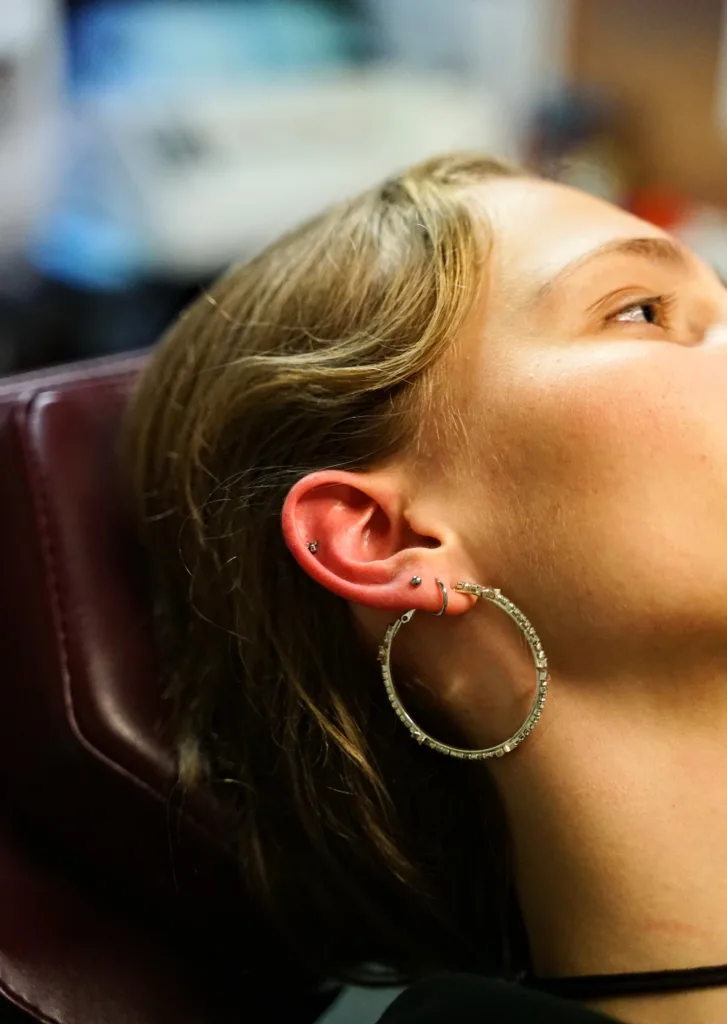
What if your piercing hasn’t fully healed yet?
In that case, it’s important to be extra careful.
A piercing may look fine on the outside, even though the canal on the inside is still healing. If you leave the jewelry out for an extended period during this phase, the canal can quickly narrow.
For example, did you get a conch, helix, or other cartilage piercing just a few months ago? If so, be sure to let both your healthcare provider and your piercer know in advance.
So don’t try this at home. Removing a fresh piercing and then trying to force it back in later is not a good idea.
Can a retainer help?
In some situations, a temporary alternative, such as a retainer, may be an option for keeping your piercing open. A retainer is a small, usually transparent or skin-colored piece of jewelry specifically designed to temporarily hold a piercing in place without requiring you to wear a noticeable metal piece of jewelry.
But please note: a retainer should not automatically be left in place during every medical procedure. Especially for an MRI, you should always check with the department first to see what is allowed.
The best approach is therefore simple: first consult with your healthcare provider, then with your piercer. That way, you’ll know exactly what needs to happen during the procedure and what options might be available for your piercing.
Can you remove your piercing yourself?
If you have a fully healed piercing with a simple piece of jewelry, that can sometimes work just fine. But not all piercing jewelry works the same way.
Some pieces of jewelry have a screw clasp, others a snap clasp, or a system that requires a bit more know-how and dexterity. And with a fresh piercing, you definitely don’t want to try fiddling with it yourself.
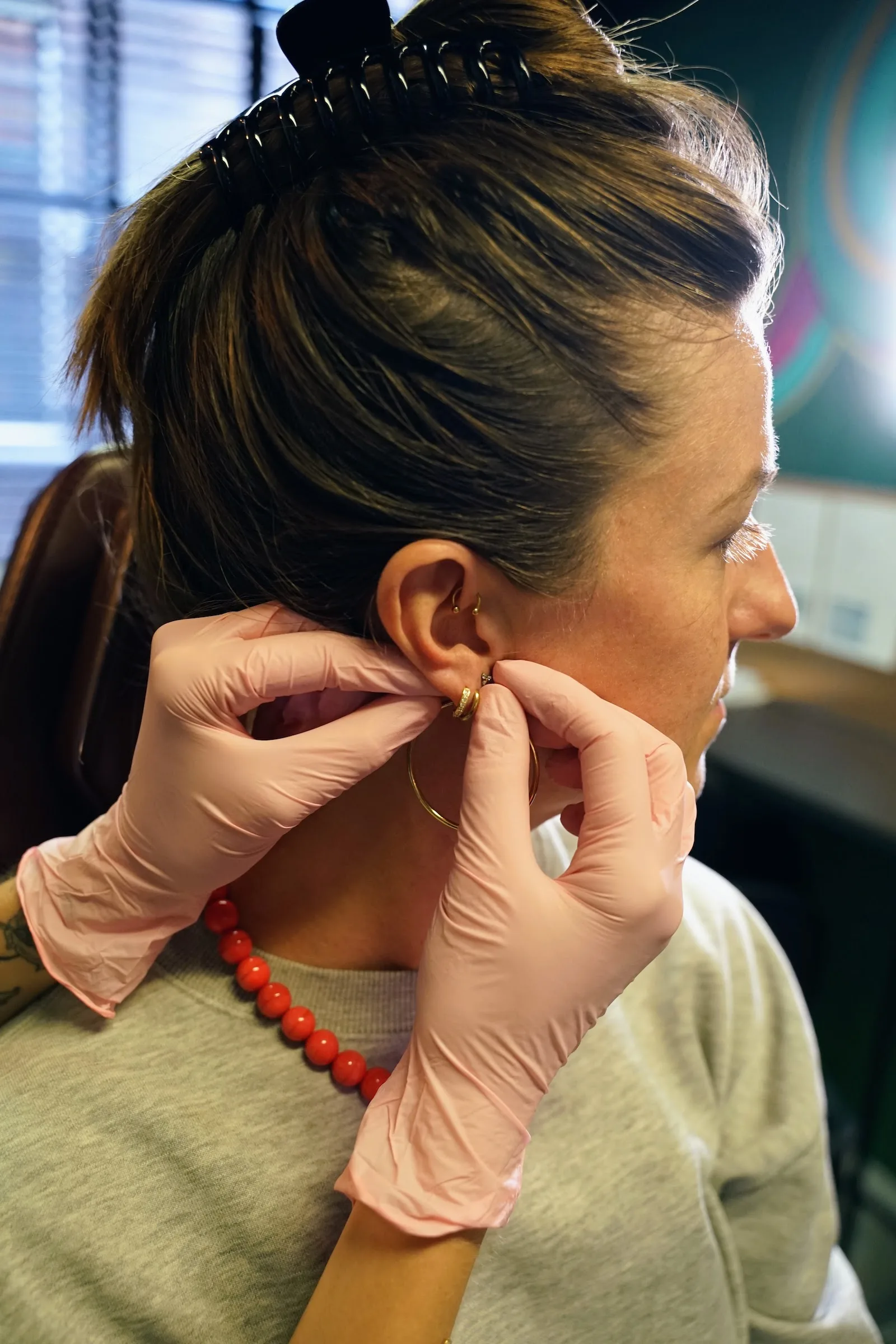
Are you having trouble removing your piece of jewelry? Then have it done by a professional piercer.
At INKORPORATED, we can take a look with you, professionally remove the jewelry if necessary, and discuss the best option for your piercing.
What if your piercing won’t go back in after surgery?
That’s exactly why it’s a good idea to think this through in advance.
Do you need to leave your piercing out for several hours or longer? If so, ask your piercer what your options are. Perhaps you can use a suitable piece of jewelry temporarily, or your piercer can help you safely reinsert the original jewelry after the treatment.
In any case, don’t try to push a piece of jewelry through a partially closed piercing yourself. This can damage the tissue and cause unnecessary irritation.
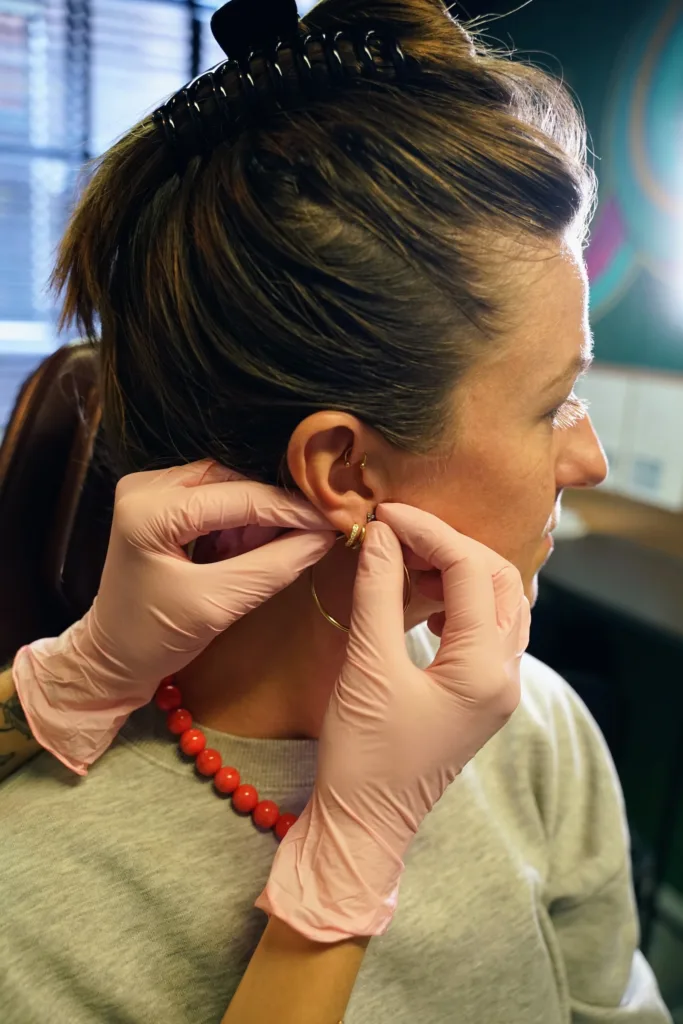
What if your piercing has completely closed?
In that case, unfortunately, you may have to get the piercing redone.
Whether that’s necessary depends on how far the canal has closed and what your ear or other piercing site looks like. Don’t try to open the hole again on your own. A professional piercer can assess the situation and determine what the safest next step is.
Have a medical procedure scheduled? Get your piercing done in time
The last thing you want is to find out five minutes before your surgery that you have to take out your favorite new piercings.
Therefore, be sure to check the hospital or clinic’s instructions in advance. Ask which pieces of jewelry need to be removed, how long they need to stay off, and whether temporary alternatives are allowed.
Do you have a new piercing or one that’s hard to remove? If so, contact your piercer as soon as possible.
At INKORPORATED, we’re happy to work with you to discuss your piercing and the options available for a medical procedure. It’s better to check beforehand than to find out after your surgery that your ear stack has taken an unexpected break.
So, you have to remove your piercing before your surgery?
Don’t panic. It doesn’t automatically mean you’ve lost your piercing.
Discuss in advance what your healthcare provider needs and let your piercer know what’s going on. Together, you can figure out the best solution for your piercing so that you can wear it as soon as it’s allowed again.
Are you scheduled for a medical procedure soon and not sure what to do about your piercing? Feel free to stop by one of INKORPORATED’s boutiques in Amsterdam or make an appointment. We’d be happy to help you figure it out.